

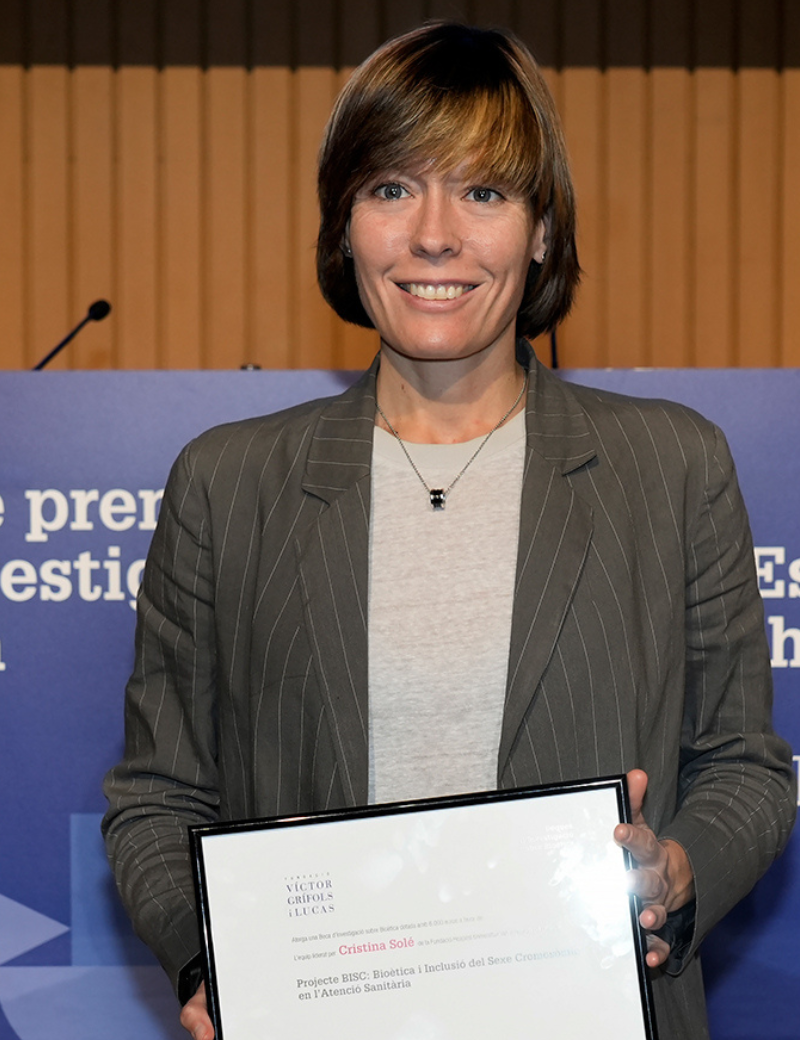
In recent decades, healthcare for trans and gender-diverse people (TGD) has progressed considerably in Catalonia, with pioneering models such as Servei Trànsit and a legal framework that reinforces self-determination and non-discrimination. Despite these advances, a key gap remains: how to ethically and safely incorporate relevant biomedical variables (such as chromosomal sex, organ inventory, and hormone use) into clinical and administrative systems without compromising fundamental rights such as confidentiality or self-determination. This challenge tests essential bioethical principles of autonomy, beneficence, non-maleficence, and justice, manifesting in real-world issues involving digital health records, clinical protocols, and healthcare decision-making.
The project aims to develop a viable proposal for integrating these variables into the Catalan health system, combining scientific rigour with full respect for human rights. It promotes participative and interdisciplinary methods, involving TGD users, healthcare professionals, and experts in bioethics, law and health technologies, to reach consensus on what information needs to be collected, how it should be recorded, and with what safeguards. The project draws inspiration from initiatives such as those of the British NHS, which tailors screenings according to organ presence and hormonal history—for example, breast cancer screening in trans women or cervical screening in trans men with a uterus—demonstrating that safe, functional, and non-intrusive integration is technically feasible.
The expected impact is twofold: to improve the quality and safety of care for TGD people, and to strengthen equity and research through more accurate and representative clinical data that move beyond the traditional binary model. Achieving this will require the adaptation of medical records (with tiered access and strict need-to-know criteria) and protocols, training, and co-production mechanisms with the TGD community.